THREADS
22 January 2027
Threads explores the way your world is woven.
Join us on a colourful Nordic odyssey. New breathtaking perspectives are revealed, focusing on historical and contemporary textile traditions and the women who have shaped them. On the significance of textiles and the value of thread. The relationship between humans, animals and nature. And how threads weave together time and space.
For thousands of years, people all over the world have spun fibres into thread and woven threads into fabric to keep themselves and their homes warm, to protect them and to adorn them. Thread, textiles and the knowledge required to create them have held great symbolic, social and economic value.
Through thread, we are connected to people from thousands of years ago, to their everyday lives, crafts and imaginations. Threads feature in mythologies, legends and folk tales. Threads, textiles and tools served as symbolic objects at festivals, parades and celebrations – all kinds of rituals.
For the first time ever, textiles and textile tools from Nordiska museet and a number of other museums in the Nordic region and the Arctic are brought together with world-famous Greek antiquities from several museums in the USA, Italy and Greece. These include an exclusive six-month loan from The Metropolitan Museum of Art in New York. The exhibition will feature more than 400 objects, as well as a large number of photographs, newly produced films and interviews.
A stunning new perspective on time
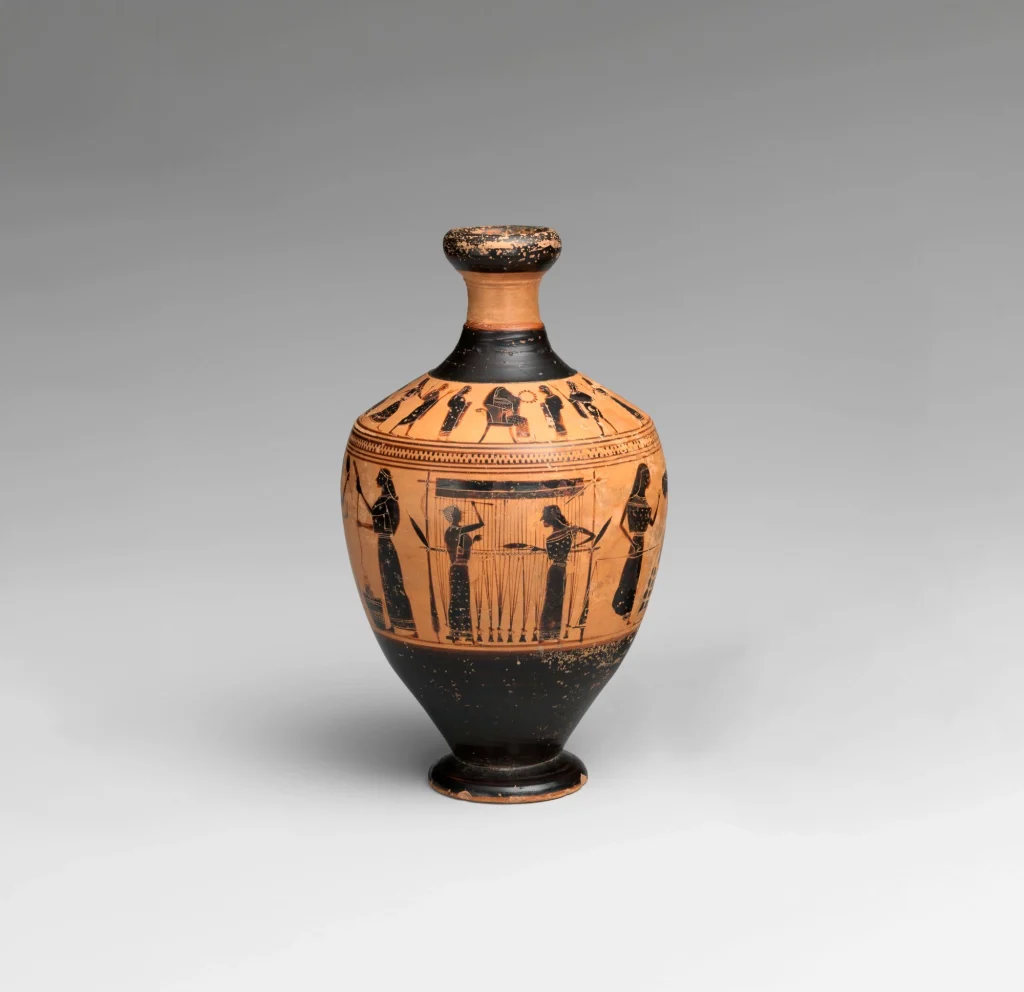
Thanks to generous loans from several museums in the USA, Italy, Greece and the Nordic countries, Threads will place the Nordic textile tradition in an entirely new historical perspective. The ancient vases, with their early depictions of warp-weighted upright looms, are being exhibited together for the first time, side by side with preserved upright warp-weighted looms from the Faroe Islands and Norway.
On ancient Greek vases, you can see various scenes depicting weaving, which researchers at Nordiska museet highlighted in studies nearly 100 years ago. They were among the first in the world to draw attention to the links between these ancient weaving scenes and traditional textile crafts in the Nordic region.
-
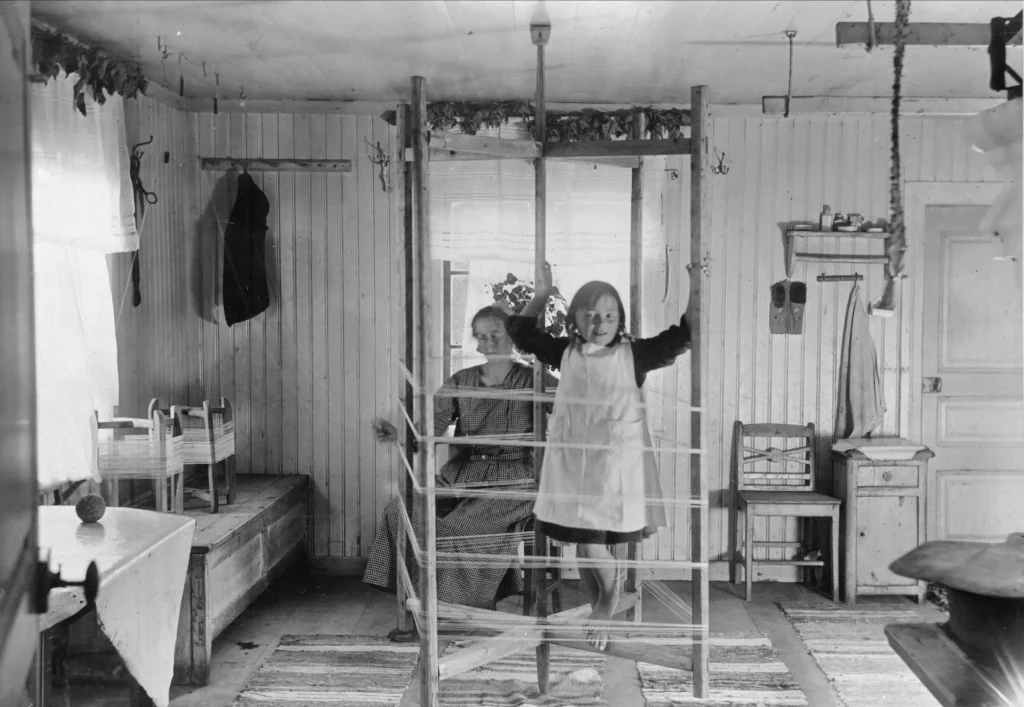
Warping at home in the living room, where a little girl is climbing on the warping frame, in Värmland in the early 20th century, NMA.0029057. The warp is the lengthwise thread in a woven fabric that is set up on the loom. The threads run from the bobbins on the sofa through a loop in the ceiling and on to the woman’s hands. Photo: Nils Keyland/ Nordiska museet -
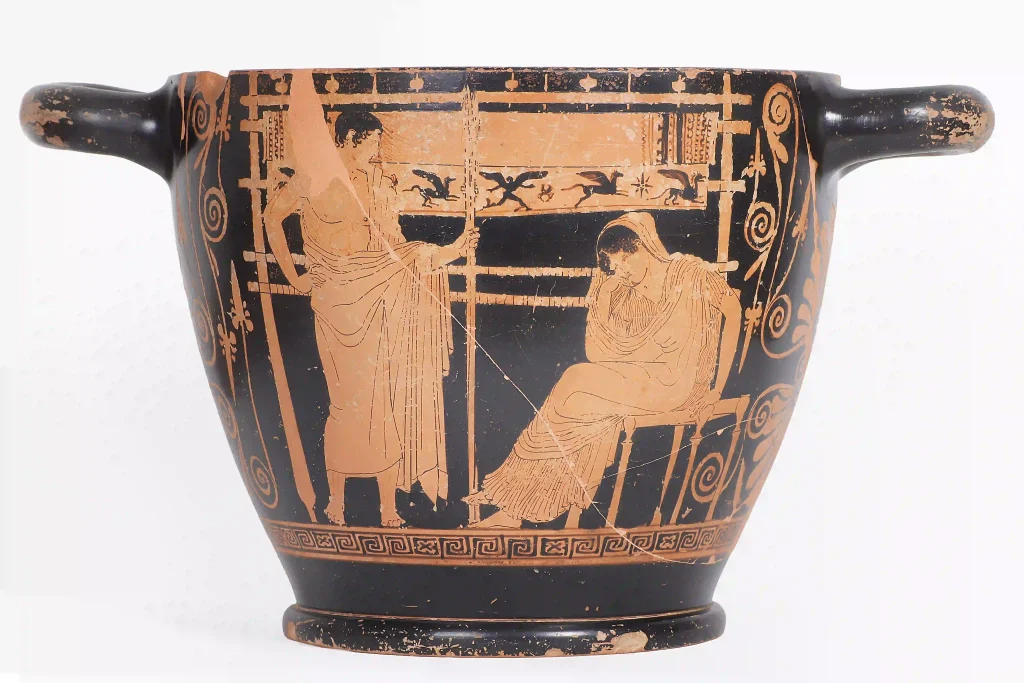
Skyphos, from Chiusi near Siena in Italy. Attributed to the Penelope painter and dated to c. 440 BC. National Etruscan Museum of Chiusi, inv. no. 61705 (formerly Collezione Civica 1831). Depicts two well-known scenes from the Odyssey: Penelope seated in front of her standing, warp-laden loom, conversing with her son Telemachus, and the moment when Odysseus is recognised by his nurse. Photo: Ariano Guastaldi/ Direzione regionale musei nazionali della Toscana – Museo nazionale etrusco di Chiusi -
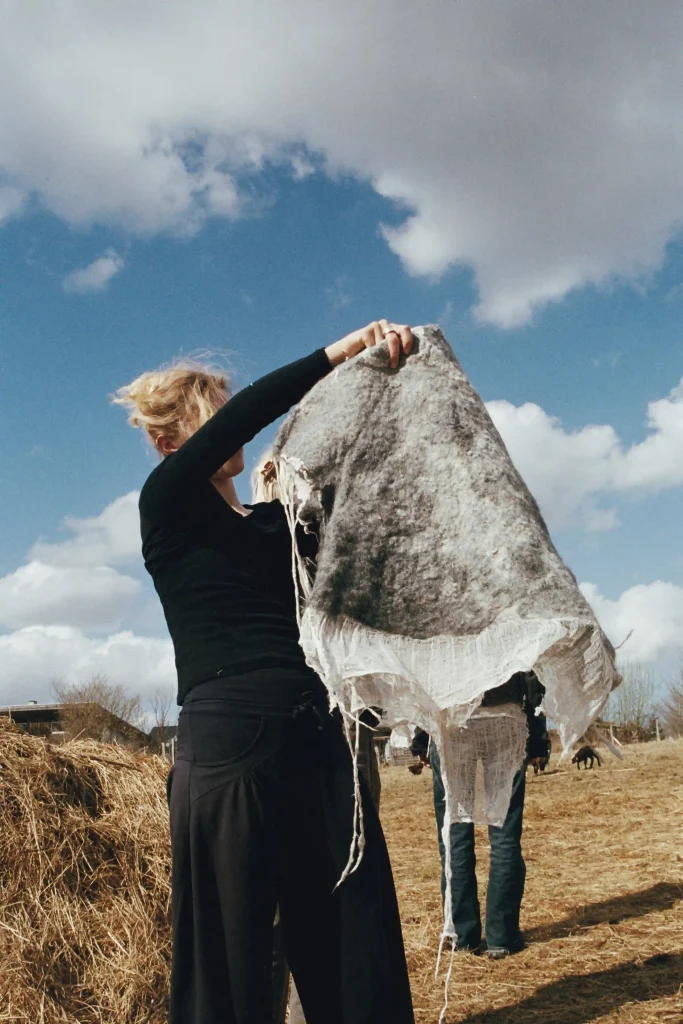
Through brand-new films and interviews, you’ll meet people from the Nordic countries whose lives are connected in various ways to textile production, animals, nature and sustainability. For example, on wet-felted wool. Wet felting is a traditional textile craft technique in which raw wool fibres are processed using water and pressure, and then woven together to form a firm, malleable piece of fabric. Photo: Hanna-Maria Rydberg/ TERRAN -
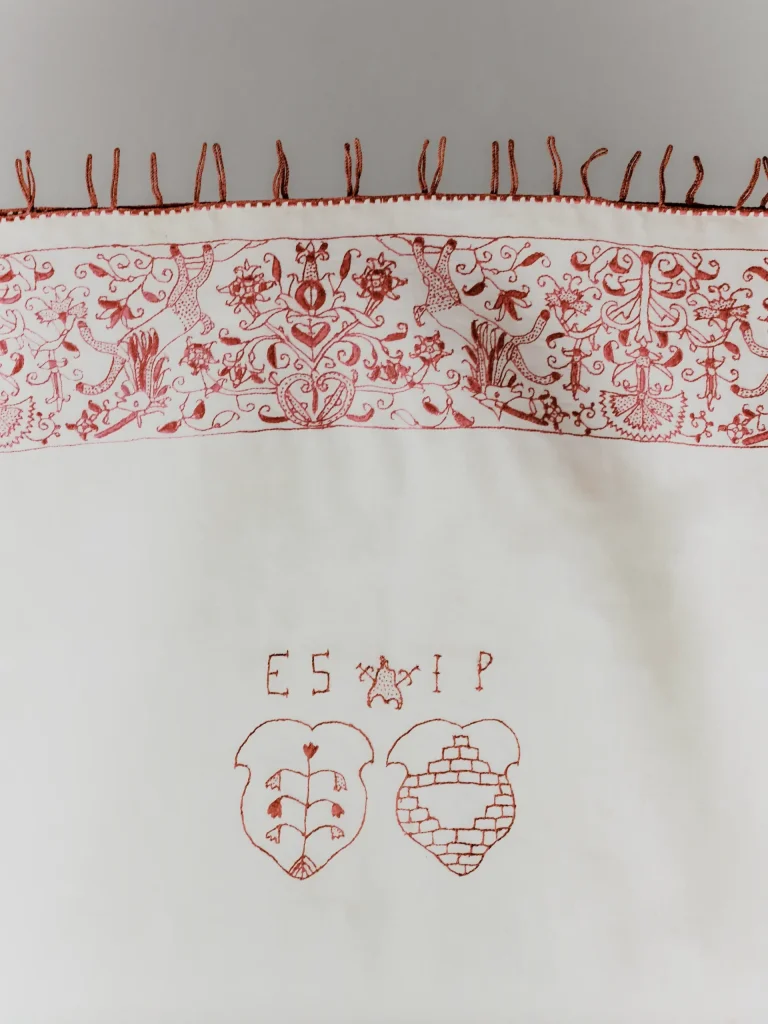
Pillowcase: Sweden, 16th century, NM.0178258B. The Nordic Museum. Part of her dowry to him, a pillowcase in white plain-woven linen with a border of red silk embroidery in stem stitch and satin stitch. Facing unicorns surrounding stylised Renaissance-style flowers and the monogram ES IP (Erik Olofsson Stake, married in 1588 to Ingeborg Posse), as well as the family coats of arms. Photo: Per Nilsson -
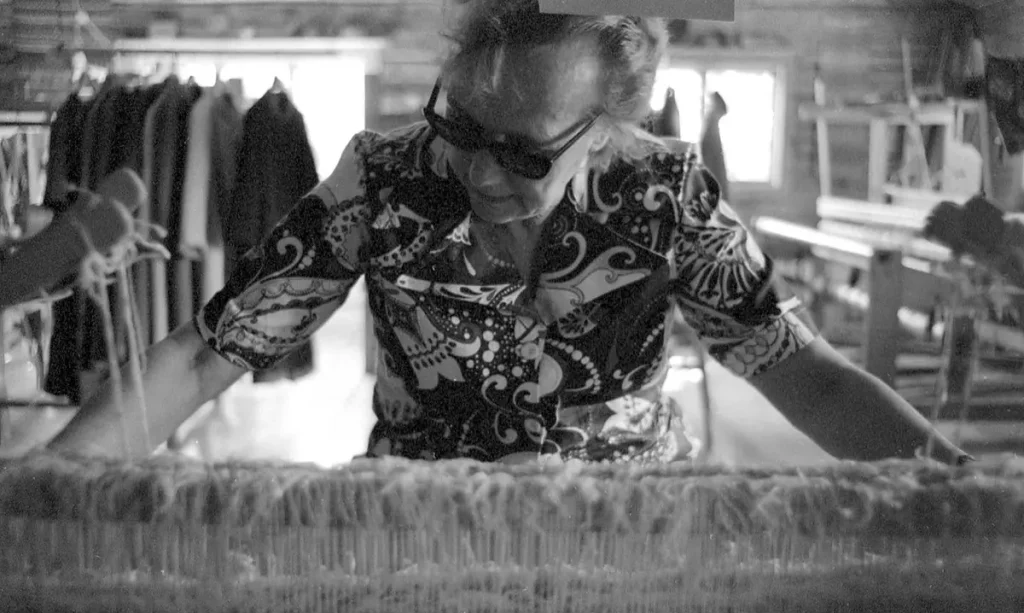
Woman at a loom, Härjedalen, circa 1972–1974, NMA.0059470. Photo: Anna-Maja Nylén/ Nordiska museet -
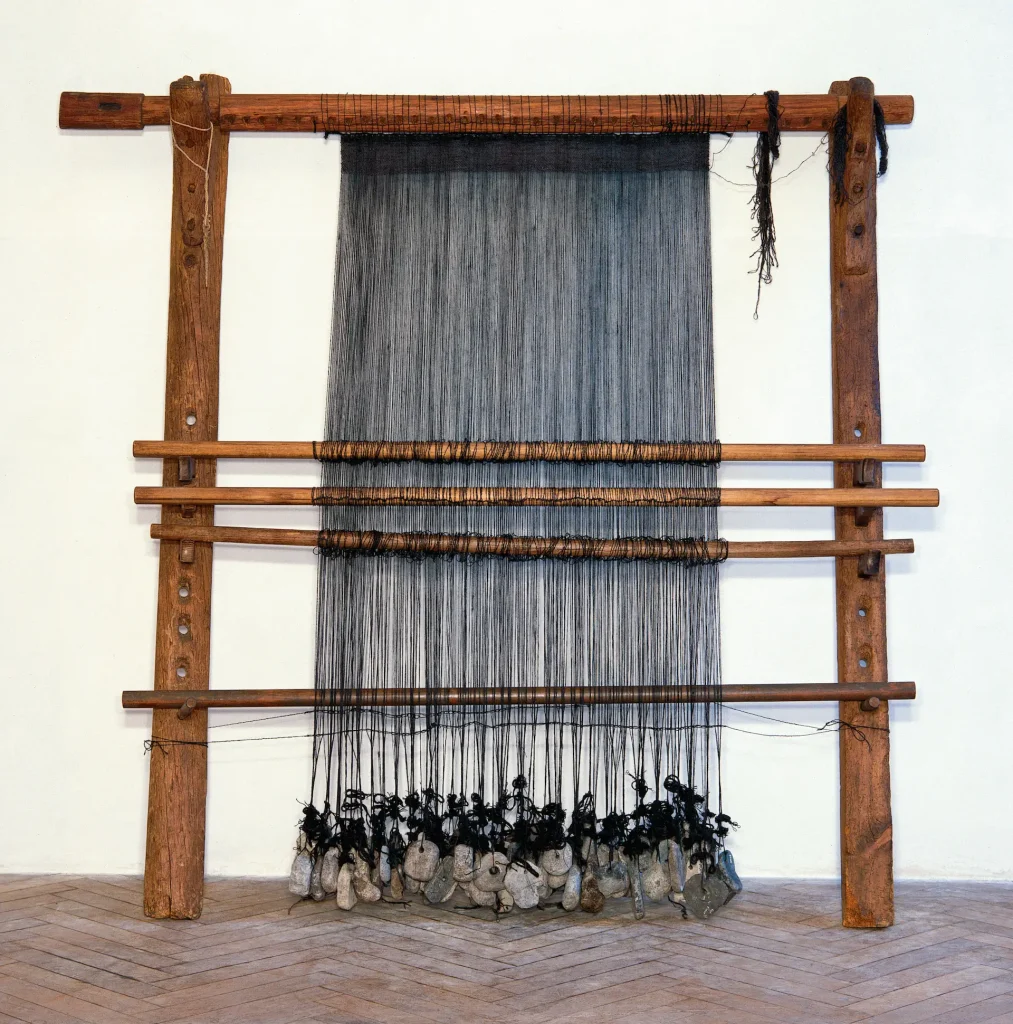
A warp-weighted loom from the Faroe Islands. In the Nordic region, the same type of warp-weighted loom was used as in the ancient Mediterranean cultures and as depicted on the Amasis Vase. The oldest surviving loom in the Nordic region. The loom features a new set-up for 2/2 weave dating from 1980. The heddle threads are weighted by loom weights engraved with runes. Photo: Niels Erik Jehrbo/ Nationalmuseet Copenhagen -
Oil flask (Lekythos), 550–530 BC, attributed to the Amasis painter. Black-figure terracotta, depicting women at work preparing wool, spinning and weaving on a warp-weight loom. On loan from The Metropolitan Museum of Art. Photo: The Metropolitan Museum of Art -
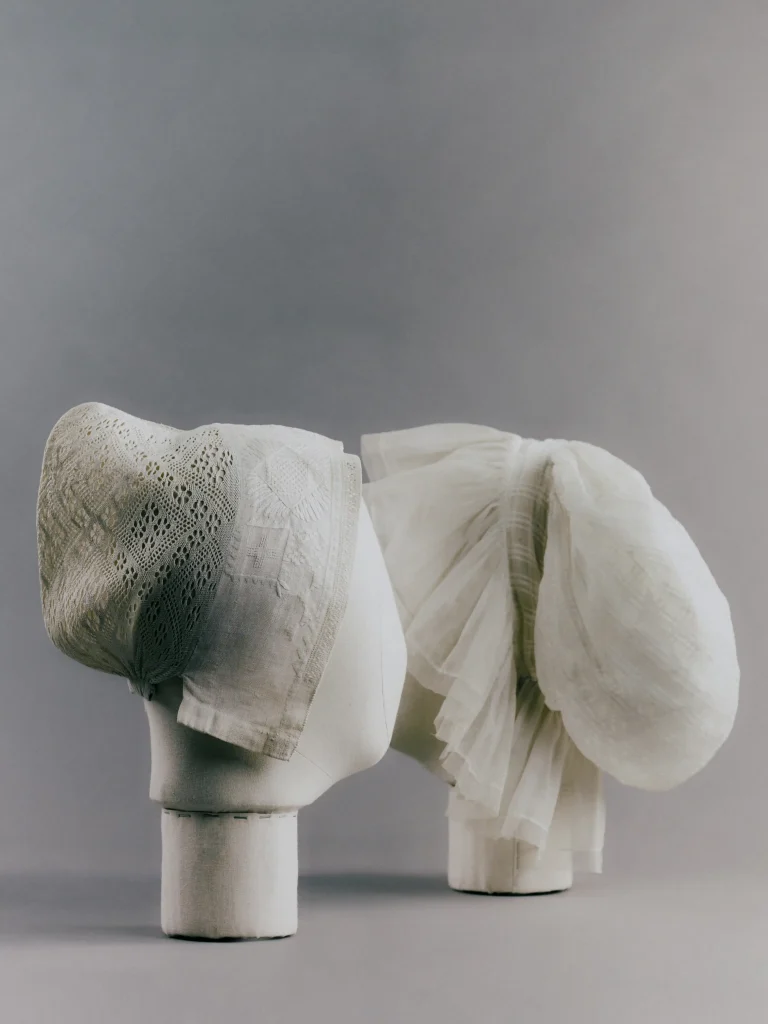
Women’s cap made of linen yarn, 1770–1799, Sweden, NM.0076406, and a women’s cap, Sweden, NM.0011333. The hood or cap is knitted from glossy white linen yarn in an openwork geometric lace pattern. The work is executed ‘across the grain’ so that the selvedges lie at the top and bottom of the hood. A seam at the crown, with a linen drawstring at the nape of the neck. At the front edge, an 8 cm wide strip of linen with embroidery in satin stitch, cross stitch and running stitch using white linen yarn. The front hem is edged with a simple drawn-thread stitch. Photo: Per Nilsson -
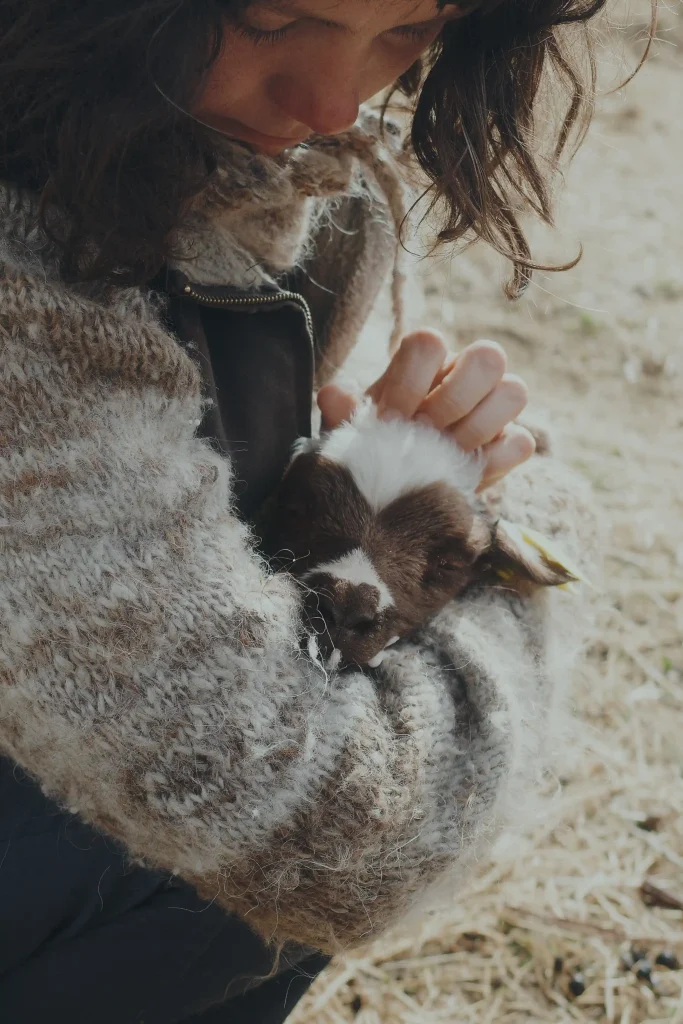
The exhibition explores the relationship between people, animals and nature. Through brand-new films and interviews, you’ll meet people from the Nordic countries whose lives are connected in various ways to textile production, animals, nature and sustainability. Photo: Julianne Honea/ TERRAN -
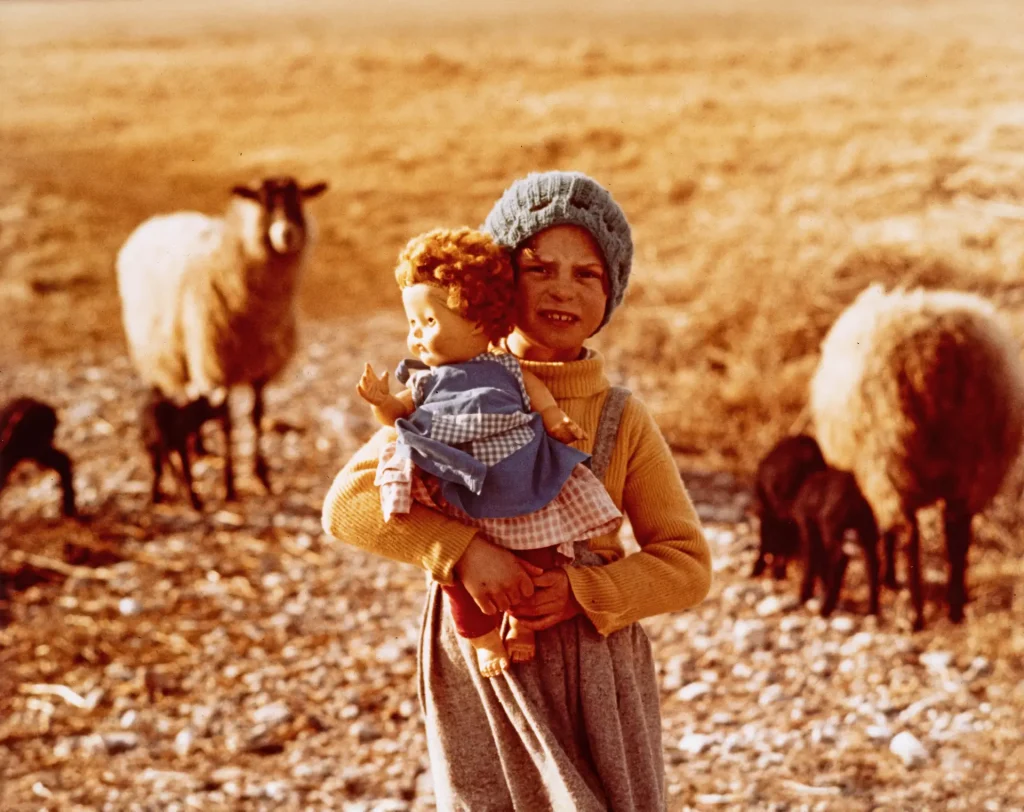
A girl in Utland, Iceland, mid-20th century, NMA.0120539. In the pre-industrial Nordic region, a girl’s fate and living conditions were determined by her textile skills – the ability to spin, weave and sew was the path to marriage and, consequently, social status. Photo: Hans Malmberg, Nordiska museet