The history of Nordiska museet
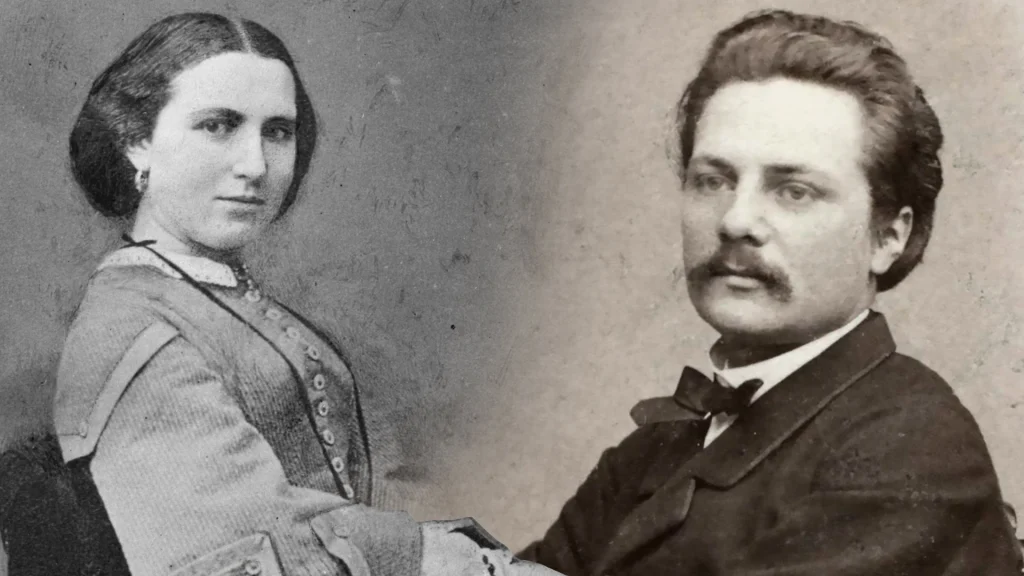
Since 1873, Nordiska museet has been collecting real objects and stories that reflect human life from the 16th century to the present for future generations. This is the story of how Artur and Sofi Hazelius created a gigantic museum and architectural masterpiece.
It begins with a journey in Dalarna
During a journey in Dalarna county in the summer of 1872, the couple Artur and Sofi Hazelius observe how folk life, clothing, customs, and traditions are being replaced by new fashions and practices. A strong sense that the old ways are disappearing and must be preserved for the future takes hold of them.
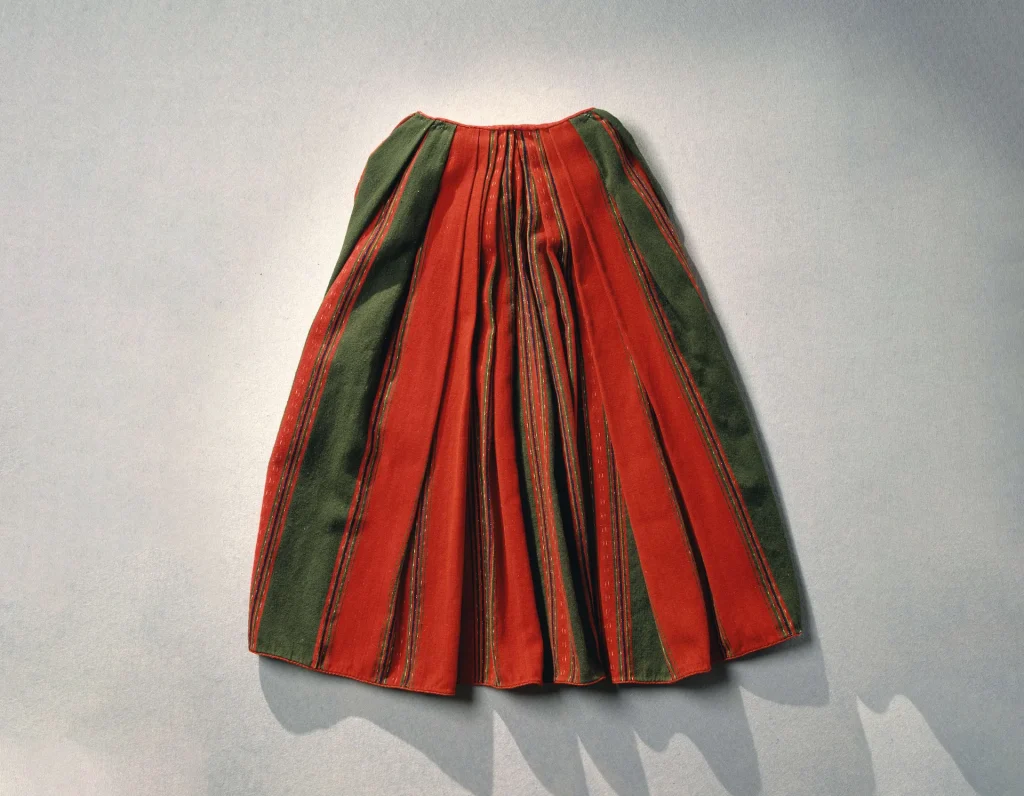
Already on the journey, they purchase what will become object number 1 in the Nordiska museet collections, a home-woven wool skirt from Stora Tuna parish. And thus begins a gigantic collection project with the help of a large network of volunteers. Artur will call them “collectors”.
It became apparent to me that one had to intervene promptly if one wanted to avail oneself of the resources for research still offered in these old dwellings being torn down, or in these furnishings being disregarded, and in these costumes being discarded.
Artur Hazelius, 1898
The Scandinavian-Ethnographic Collection opens in 1873
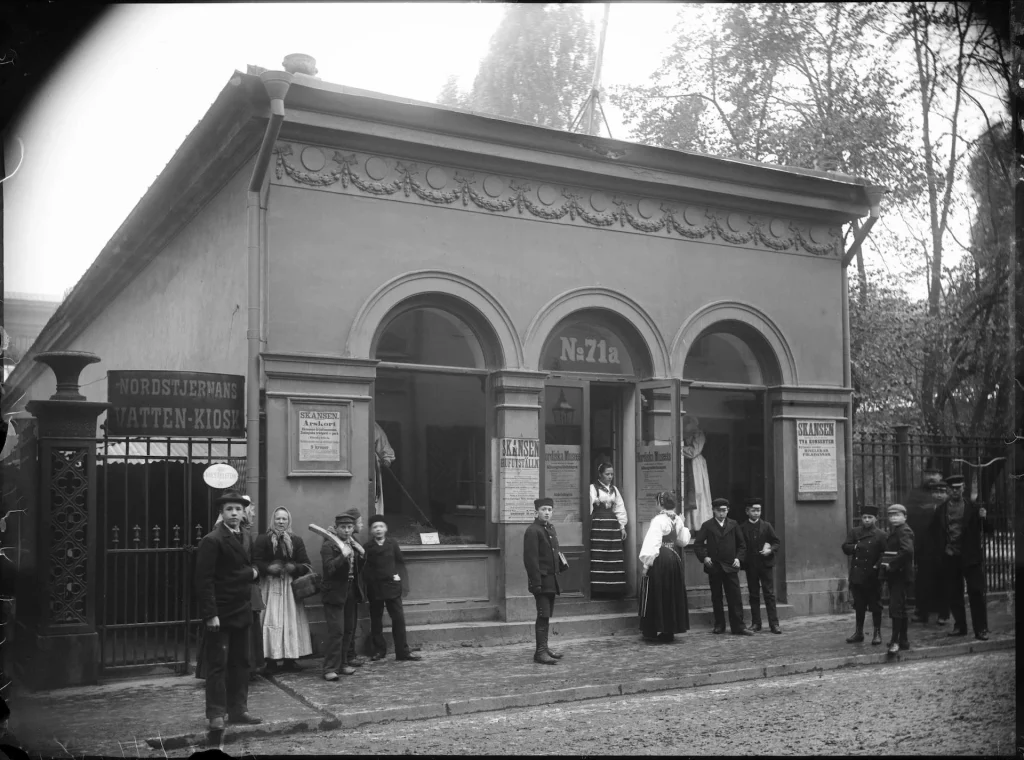
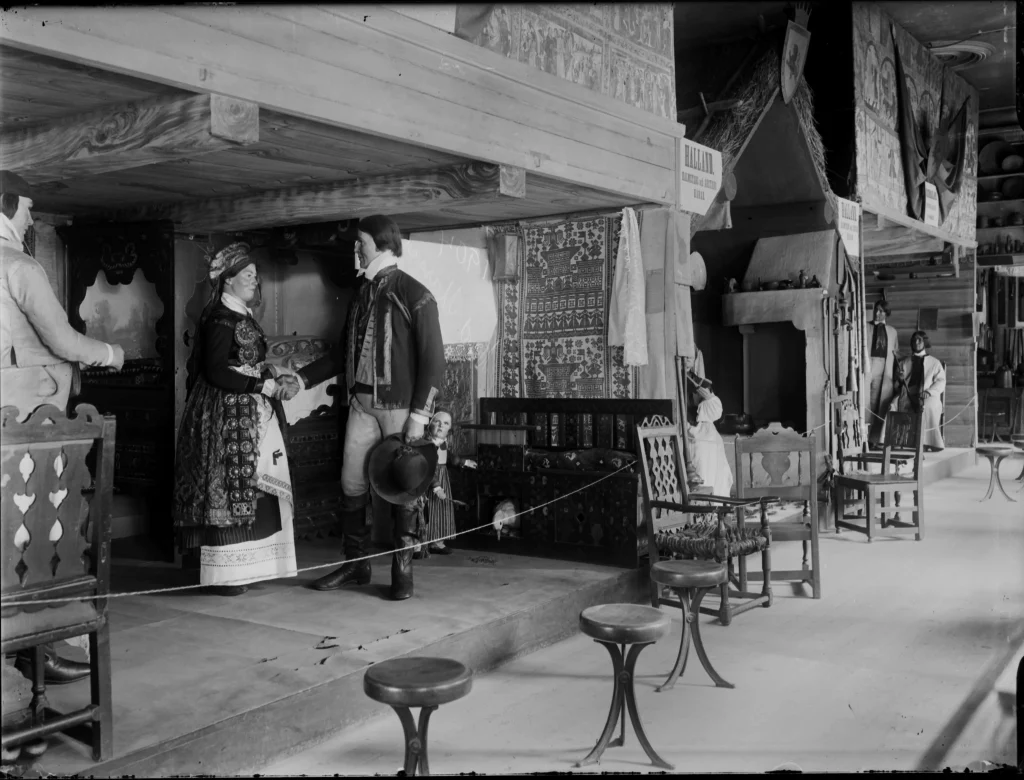
After just one year, there is a large number of items to showcase. On October 24, 1873, Artur and Sofi open the Scandinavian-Ethnographic Collection in a rented space at Drottninggatan 71 in central Stockholm.
The audience encounters realistic, dramatized scenes with dolls, costumes, and items from the disappearing rural culture – amidst industrialized Stockholm.
The innovative exhibition proves to be a success, both at home and at the World Exhibition in Paris in 1878. It is unique in its focus on the people, not kings and wars, as was common for national museums of the time.
Nordiska museet on Djurgården completed in 1907
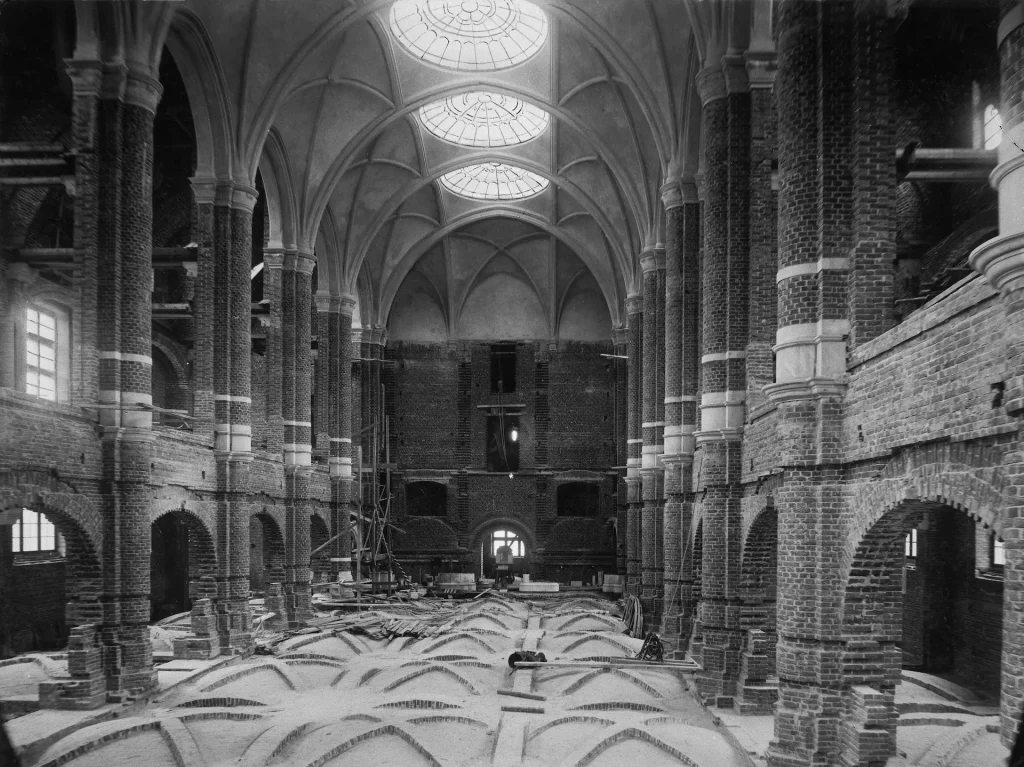
On October 24, 1888, the first shovel is put into the ground for the museum building on Djurgården in Stockholm. Artur’s dream of showcasing the collections in a palace for the people is about to come true. However, there are obstacles along the way, and it takes more than a quarter of a century from the drawing board to the inauguration.
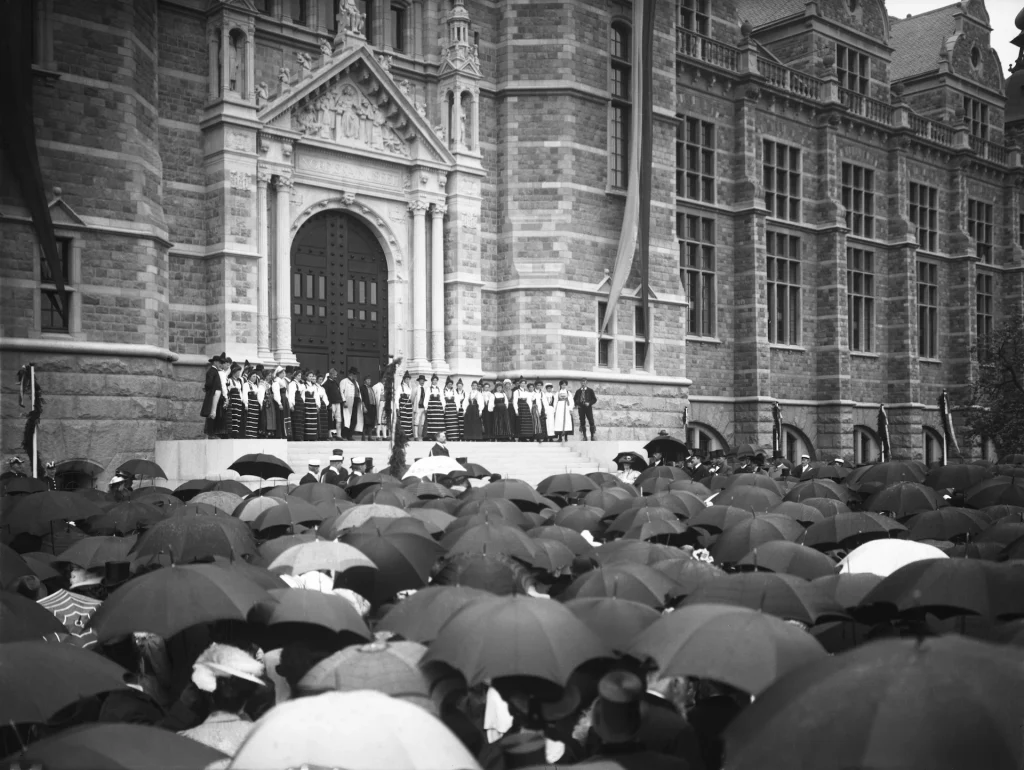
In June 1907, the first visitors climb the stairs. Daylight from the skylights is the only illumination in the Great Hall, and the statue of Gustav Vasa in plaster depicts a tired and aging king. Neither Artur nor Sofi lived to see the inauguration day. Artur passes away in 1901, and Sofi already in 1874.
Stories and memories
In addition to objects, Artur considers it equally important to preserve the intangible cultural heritage for the future: folklore, tales, legends, songs, poems, music, dance, traditions, customs, and practices.
Artur laid the foundation for Nordiska museet’s archival collections, and as the years pass, the museum gathers diaries, materials on folklore and folk medicine, records from interviews, autobiographies, farm archives, family archives, archives from individuals, businesses, and associations.
Four significant donations provide historical environments and parks
Nordiska museet expands further during the 20th century through significant donations of four unique cultural-historical environments to preserve:
- Härkeberga curate’s residence 1929
- Tyresö palace 1930
- Julita manor 1941
- Svindersvik 1949
As a result, Nordiska museet’s currently manages several hundred buildings, vast historical parks, forests, cultivated landscapes, and fishing and water areas. It’s a crucial societal mission to sustainably care for them for the future, especially from climate and sustainability perspectives.
Today, over one and a half million objects, six million images, and thousands of stories and memories are collected in Nordiska museet. We preserve them for future generations, along with the home-woven wool skirt from the journey in Dalarna.
- 1873: The Scandinavian Ethnographic Collection opens its first exhibition in Davidson’s pavilions on Drottninggatan in Stockholm
- 1880: The collection becomes a foundation and is renamed the Nordic Museum
- 1888: The first step towards what would become the Nordic Museum building on Djurgården is taken
- 1891: Hazelius’s second creation, the Skansen open-air museum, opens to the public
- 1897: The General Art and Industry Exposition in Stockholm; the Nordic Museum is not yet complete but displays a temporary section which is demolished once the exhibition closes
- 1901: Artur Hazelius passes away
- 1907: The Nordic Museum on Djurgården opens to the public
- 1925: Carl Milles’s new colossal statue of Gustav Vasa, carved from oak, is installed in the Great Hall and unveiled at two o’clock in the afternoon on 22 May. It replaces his earlier plaster statue of Vasa and marks the museum’s shift to covering the period from 1523 to the present day
- 1928–2016: Contemporary documentation through questionnaires sent to a network of ‘local correspondents’, private individuals across the country
- 1929: Härkeberga chaplain’s house is donated to the foundation by the South-West Uppland Local History Society
- 1930: Tyresö Palace, including the park and surrounding land, is donated to the foundation by Claes Lagergren
- 1932: Electric lighting installed in the Great Hall
- 1938 och 1941: The exhibitions Fishing, The Farmer’s Household and Hunting – considered modern for their time – proved popular, and many were horrified by the realistic scenes depicting a bear and a fox caught in the hunter’s traps
- 1941: The Foundation receives the Julita Manor estate as a gift from its last owner, Arthur Bäckström
- 1945: Collection of workers’ memorabilia from various occupational groups
- 1949: Transfer of the Svindersvik summer retreat to the Nordic Museum Foundation
- 1973: The museum celebrates its centenary with the exhibition 100 Years of Sweden – Know Thyself, a journey through Swedish history beginning in 1873, featuring interiors, a high street, a railway station, a middle-class drawing room and a city-centre studio flat. Many remember the barn with its smell of cows and manure
- 1991: The Children’s playhouse Lekstugan opens. Many people return to Lekstugan as adults to let their own children experience 19th-century country life
- 1997: The exhibition The Dream of the Car, featuring cars, caravans and a petrol station from the 1940s, attracts many men. In front of the entrance, a red Volvo Amazon replaces the statue of King Karl X Gustav
- Från 2015: Digital collection via the website Minnen.se of personal stories, photos, drawings, films and audio recordings
- 2019: The Arctic – as the ice melts. A multi-year research collaboration forms the basis for the exhibition on the lives of the four million people living in the Arctic
- 2020: New entrance from the rear courtyard, artistically designed by the Finnish-Sámi artist Outi Pieski
- 2020: The COVID-19 pandemic results in the Nordic Museum being temporarily closed
- 2020: Digital collection of COVID-19 stories. The Nordic Museum is the first museum in the world to collect people’s reflections on everyday life during the pandemic
- 2020: The Time vault Tidsvalvet, an interactive museum experience for everyone aged 8 and over, opens
- 2023: The Nordic Museum’s 150th anniversary on 24 October
- 2024: The exhibiton Nordbor opens to the public; this permanent core exhibition – the museum’s largest ever – brings its mission to life through objects and stories collected by the museum over the past 150 years.
- 2025: Carl Milles’s oak sculpture of Gustav Vasa celebrates its 100th anniversary. It was unveiled on 22 May 1925 at two o’clock in the afternoon